Bed bug heat and chemical remediation in Brandon addresses the resilient biology of bed bug populations that standard over-the-counter pyrethroid sprays cannot penetrate. In Hillsborough County's humid subtropical…
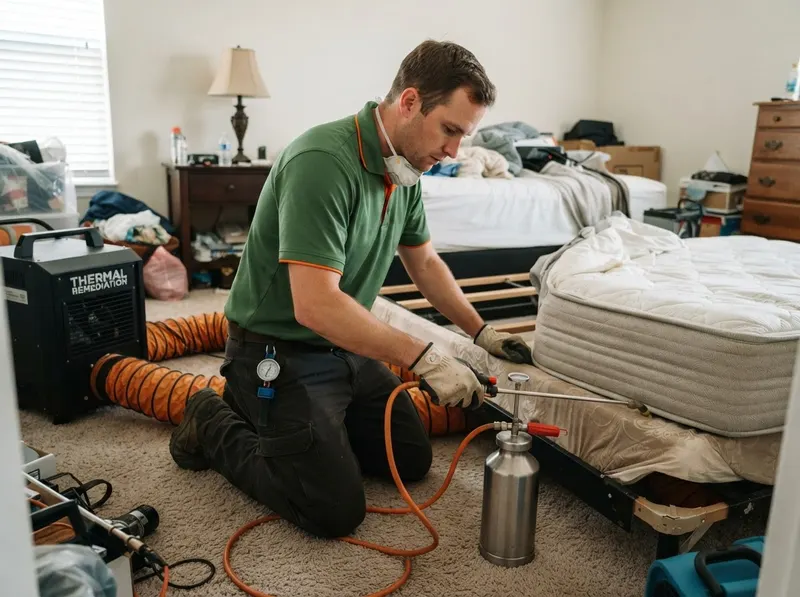
Bed bug heat and chemical remediation in Brandon addresses the resilient biology of bed bug populations that standard over-the-counter pyrethroid sprays cannot penetrate. In Hillsborough County's humid subtropical climate, elevated indoor humidity levels accelerate the incubation cycle of bed bug eggs, allowing populations to expand throughout bedroom furniture within 10 to 14 days. Thermal remediation resolves this rapid life cycle by raising ambient room air temperatures to 122°F for a sustained 90-minute minimum duration, a threshold documented to denature the vital proteins within bed bugs across every developmental stage, including heat-resistant egg shells. High-output industrial thermal blowers force hot air into baseboards, hollow door frames, and carpet tack strips throughout neighborhoods like Bloomingdale, Providence Lakes, and Heather Lakes without requiring the disposal of structural furnishings.
Selecting between thermal remediation and targeted chemical treatments hinges on the spatial dispersal of the infestation and structural constraints. A standalone chemical treatment using insect growth regulators and liquid residuals fits isolated introductions confined strictly to a single mattress seam or upholstered chair, particularly where delicate belongings like vinyl records, wax items, or certain electronics cannot tolerate high temperatures. The trade-off is treatment duration: chemical protocols rely on nymphs crossing treated surfaces over 14 to 21 days as eggs hatch. Conversely, whole-home thermal convection suits multi-room activity in larger single-family layouts across Brentwood Hills and Sterling Ranch, eradicating the entire infestation in a single day, though it requires homeowners to remove heat-sensitive items including aerosol cans, cosmetics, and sensitive medical adhesives prior to arrival.
Long-term containment requires combining thermal heat with a non-repellent chemical application along the structural perimeter. Heat flushes live insects out of deep wall voids toward cooler exterior perimeters; applying a targeted micro-encapsulated barrier along baseboards, behind electrical switch plates, and around bed frames captures insects fleeing the thermal zone. This dual approach avoids continuous indoor chemical exposure for children and domestic pets once the application dries, operating without recurring quarterly subscription contracts or automatic billing enrollments.
Every job gets a firm, written price after a free on-site visit.
Tell us about your bed bug heat and chemical remediation job in Brandon and we'll send a clear, written quote, usually the same day.
 Cypress Finch Pest Control