Drywood termite spot treatment provides localized wood-boring insect eradication for residential structures in Brandon, particularly in neighborhoods like Limona, Brandon Hills, and Heather Lakes where older pine and…
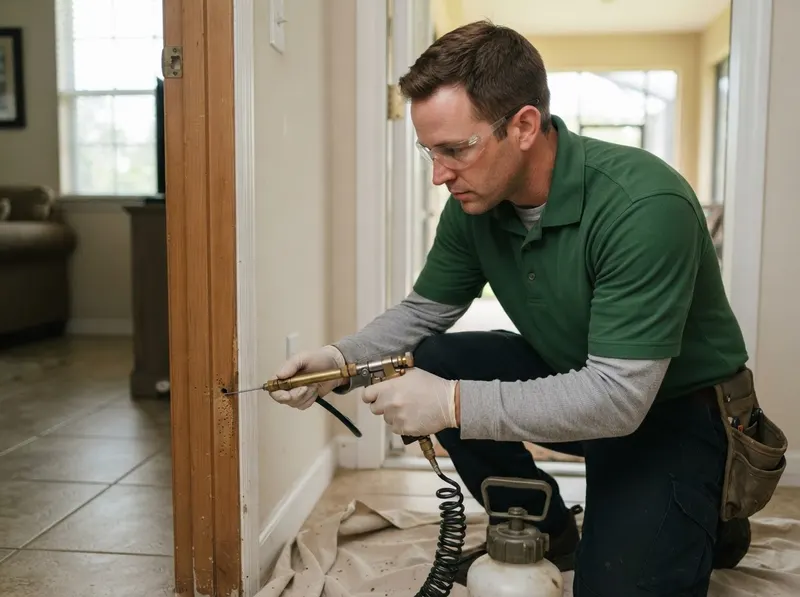
Drywood termite spot treatment provides localized wood-boring insect eradication for residential structures in Brandon, particularly in neighborhoods like Limona, Brandon Hills, and Heather Lakes where older pine and oak framing is common. Unlike subterranean termites that require soil contact, drywood termites live entirely inside dry framing, window casings, door headers, and attic trusses. When an infestation is confined to identifiable structural members, direct localized treatment eliminates the colony without requiring structural tenting, chemical off-gassing periods, or exterior landscape clearing. Spot intervention operates through direct gallery injection, wherein small 1/8-inch access holes are drilled into the infested wood grain and filled with non-repellent liquid termiticides or expanding foam formulations. These compounds coat the gallery walls and transfer between grooming workers, neutralizing the localized population within several days.
Selecting localized spot treatment involves specific structural trade-offs. Spot treatment is appropriate when fecal pellets (frass) or swarm exit holes are limited to isolated, accessible areas such as a single door jamb in Brentwood Hills or an exposed fascia board in Providence Lakes. The primary trade-off is geographic scope: spot treatments eradicate termites within the target timber, but they do not protect untreated structural lumber elsewhere in the building. For homes in Sterling Ranch, Cross Creek Park, or Valrico Forest exhibiting widespread, multiple-room infestations across inaccessible attic voids or multi-layer subflooring, full-structure fumigation remains the necessary alternative. Spot treatment avoids the displacement of indoor pets, eliminates hotel stays, and avoids the structural roof risks associated with walking heavy tarps across fragile tiles.
Brandon's subtropical humidity accelerates drywood termite swarming between May and September, particularly around the Paul Sanders Park basin and the Brandon Parkway corridor. The remediation process follows three steps: first, physical mapping of kick-out holes and acoustic sounding to delineate gallery boundaries; second, low-pressure mechanical injection of termiticides directly into the internal feeding channels; and third, wood-patch sealing of access drill holes to monitor for future activity. Property owners can schedule evaluations directly by phone at (656) 254-1361.
Every job gets a firm, written price after a free on-site visit.
Tell us about your drywood termite spot treatment job in Brandon and we'll send a clear, written quote, usually the same day.
 Cypress Finch Pest Control